
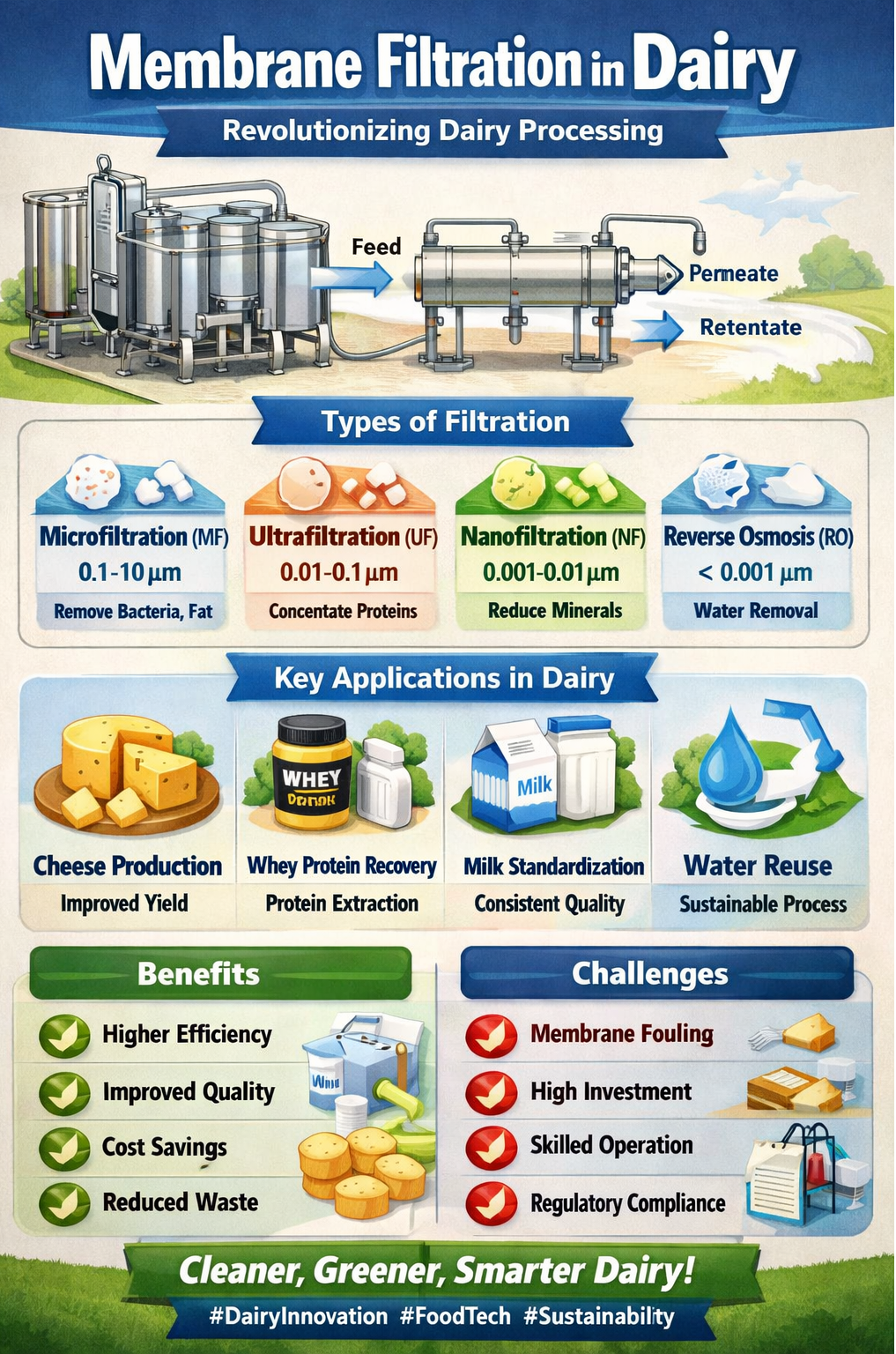
Membrane filtration is the unsung hero of the dairy plant. By using pressure to force milk through semi-permeable barriers, we can 'unstack' milk into its most valuable components. The 4 Power Players: Microfiltration (MF): The 'Giant Sieve.' It catches bacteria and fat, helping extend shelf life naturally without high heat. Ultrafiltration (UF): The 'Protein Builder.' This is how we make high-protein milk and Greek yogurt by concentrating proteins while letting lactose and minerals pass. Nanofiltration (NF): The 'Mineral Tuner.' Perfect for de-salting whey or creating lactose-free products. Reverse Osmosis (RO): The 'Water Saver.' It removes only water, concentrating everything else to reduce shipping costs and save energy. 🚀 Why it matters in 2026: It’s not just about efficiency—it’s about sustainability. These systems allow dairies to recycle water and create 'zero-waste' protein streams. #DairyTech #FoodScience #Sustainability #MembraneFiltration #DairyProcessing #Innovation Membrane filtration in dairy processing Cross-flow filtration systems Microfiltration (MF) systems Ultrafiltration (UF) for milk protein Nanofiltration (NF) demineralization Reverse Osmosis (RO) in dairy plants Ceramic vs. Polymeric membranes Spiral-wound membrane elements High-protein milk production Greek yogurt concentration technology Lactose-free milk processing Whey protein isolate (WPI) production Milk protein concentrate (MPC) 85 Casein fractionation Extended Shelf Life (ESL) milk technology How to increase cheese yield with ultrafiltration? Difference between NF and RO in dairy processing. Best membrane for cold milk microfiltration. Cost-benefit of reverse osmosis for milk transport. Automated CIP (Clean-In-Place) for dairy membranes.


This is your website preview.
Currently it only shows your basic business info. Start adding relevant business details such as description, images and products or services to gain your customers attention by using Boost 360 android app / iOS App / web portal.
Did you know that the "magic" in modern dairy happens at the molecular level? 🧪🥛
2026-04-25T03:49:57
Membrane filtration is the unsung hero of the dairy plant. By using pressure to force milk through semi-permeable barriers, we can 'unstack' milk into its most valuable components. The 4 Power Players: Microfiltration (MF): The 'Giant Sieve.' It catches bacteria and fat, helping extend shelf life naturally without high heat. Ultrafiltration (UF): The 'Protein Builder.' This is how we make high-protein milk and Greek yogurt by concentrating proteins while letting lactose and minerals pass. Nanofiltration (NF): The 'Mineral Tuner.' Perfect for de-salting whey or creating lactose-free products. Reverse Osmosis (RO): The 'Water Saver.' It removes only water, concentrating everything else to reduce shipping costs and save energy. 🚀 Why it matters in 2026: It’s not just about efficiency—it’s about sustainability. These systems allow dairies to recycle water and create 'zero-waste' protein streams. #DairyTech #FoodScience #Sustainability #MembraneFiltration #DairyProcessing #Innovation Membrane filtration in dairy processing Cross-flow filtration systems Microfiltration (MF) systems Ultrafiltration (UF) for milk protein Nanofiltration (NF) demineralization Reverse Osmosis (RO) in dairy plants Ceramic vs. Polymeric membranes Spiral-wound membrane elements High-protein milk production Greek yogurt concentration technology Lactose-free milk processing Whey protein isolate (WPI) production Milk protein concentrate (MPC) 85 Casein fractionation Extended Shelf Life (ESL) milk technology How to increase cheese yield with ultrafiltration? Difference between NF and RO in dairy processing. Best membrane for cold milk microfiltration. Cost-benefit of reverse osmosis for milk transport. Automated CIP (Clean-In-Place) for dairy membranes.
2026-04-25T03:49:57


Submit Your Enquiry