
Gelatin is dissolved in water, but to use it in industries (like food, pharma, or photography), it often needs to be concentrated. Instead of boiling off water (which uses a lot of energy and can damage gelatin’s properties), membranes are used. Membrane type: Ultrafiltration or nanofiltration membranes are chosen because they allow small molecules (like water and salts) to pass through, while holding back the larger gelatin molecules. Process: The gelatin solution is pumped across the membrane surface. Water and impurities move through the membrane (called the permeate), while the gelatin-rich solution stays behind (called the retentate). Advantages: Energy-efficient compared to evaporation. Maintains gelatin’s functional properties (like gelling strength). Produces a consistent, high-quality concentrated solution. Think of it like a very fine sieve that lets water slip through but keeps the gelatin molecules in place, gradually thickening the solution.


This is your website preview.
Currently it only shows your basic business info. Start adding relevant business details such as description, images and products or services to gain your customers attention by using Boost 360 android app / iOS App / web portal.
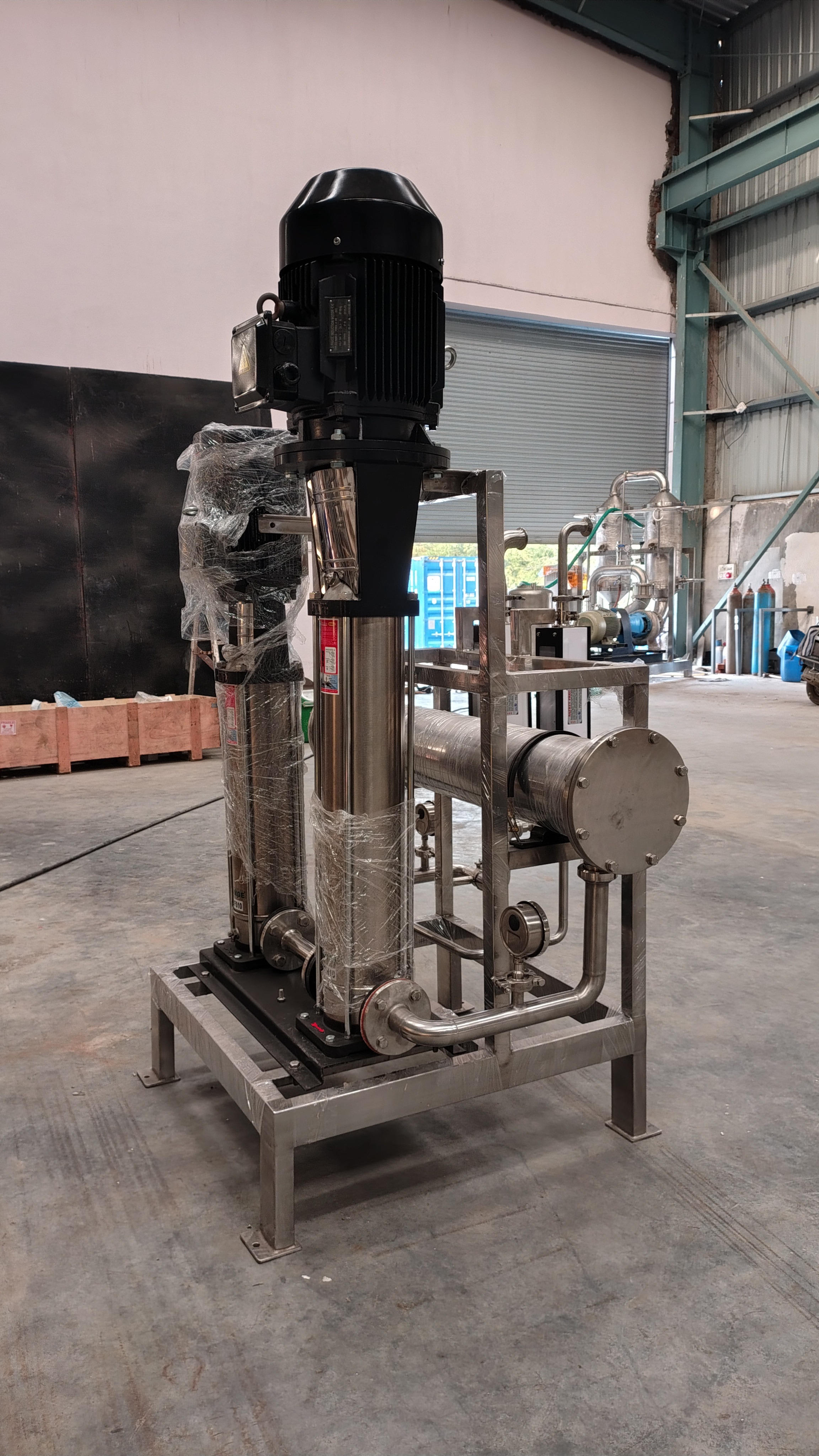
Gelatin concentration system using membranes
2026-03-14T05:22:03
Gelatin is dissolved in water, but to use it in industries (like food, pharma, or photography), it often needs to be concentrated. Instead of boiling off water (which uses a lot of energy and can damage gelatin’s properties), membranes are used. Membrane type: Ultrafiltration or nanofiltration membranes are chosen because they allow small molecules (like water and salts) to pass through, while holding back the larger gelatin molecules. Process: The gelatin solution is pumped across the membrane surface. Water and impurities move through the membrane (called the permeate), while the gelatin-rich solution stays behind (called the retentate). Advantages: Energy-efficient compared to evaporation. Maintains gelatin’s functional properties (like gelling strength). Produces a consistent, high-quality concentrated solution. Think of it like a very fine sieve that lets water slip through but keeps the gelatin molecules in place, gradually thickening the solution.
2026-03-14T05:22:03


Keywords
- gelatin molecule retention membranes
- membrane system for industry use
- high-quality gelatin concentrate production
- energy-efficient gelatin concentration
- gelatin solution ultrafiltration process
- water and salt separation membranes
- membrane filtration for gelatin
- nanofiltration gelatin concentration
- ultrafiltration membrane for gelatin
- gelatin concentration membrane system
Submit Your Enquiry