
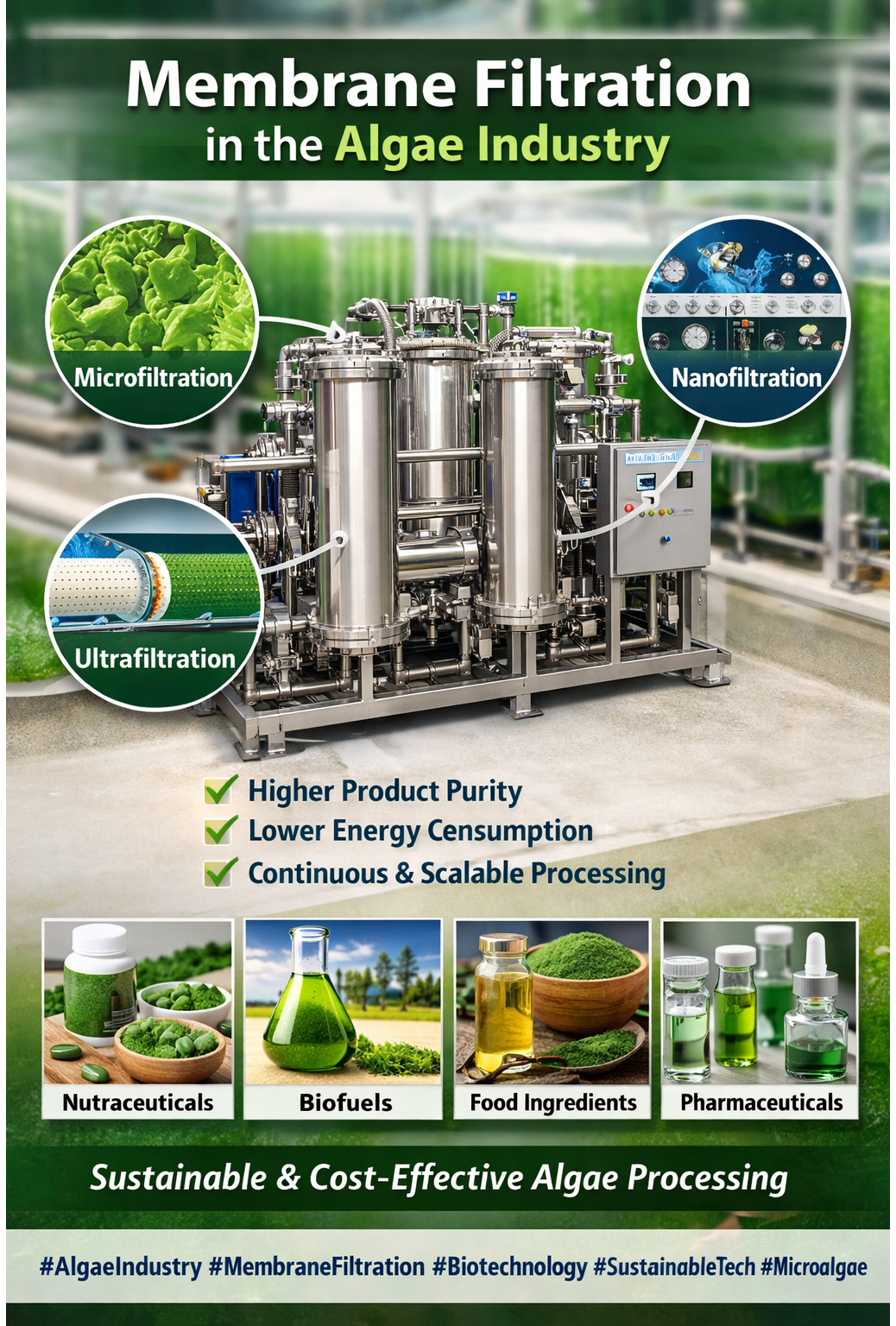
Gemini said Harnessing the power of algae requires precision, and membrane filtration is the 'secret sauce' making the industry sustainable. 🌿💧 In the world of algae production, moving from a pond of green water to a high-value product (like biofuels, omega-3s, or protein powder) is all about separation. Here is the breakdown of how membranes do the heavy lifting: 1. The Process: Concentration & Clarification Instead of using high-heat evaporation or energy-heavy centrifuges, membrane filtration uses physical barriers to separate algae cells from their growth medium. Microfiltration (MF): Primarily used for harvesting. It captures the algae cells while letting the water pass through. Ultrafiltration (UF): Used for fractionation. It can separate smaller components like proteins or lipids from the cellular debris. 2. Why the Algae Industry Loves It Energy Efficiency: It uses significantly less power than traditional thermal drying or high-speed centrifugation. Product Integrity: Since it’s a cold process, it doesn’t 'cook' the delicate nutrients or oils within the algae. Water Recycling: The filtered water (permeate) is often clean enough to be pumped straight back into the bioreactors, creating a circular system. #AlgaeIndustry #MembraneFiltration #Biotech #Sustainability #Microalgae #GreenInnovation #CircularEconomy Microfiltration in algae processing Ultrafiltration for microalgae Nanofiltration technology Algae biomass separation Microalgae harvesting technology Biotechnology filtration systems Algae biofuel production Algae nutraceutical production Algae food ingredients Algae pharmaceutical applications Sustainable algae processing Membrane filtration Algae processing technology Microalgae filtration Algae industry technology Membrane filtration system


This is your website preview.
Currently it only shows your basic business info. Start adding relevant business details such as description, images and products or services to gain your customers attention by using Boost 360 android app / iOS App / web portal.
🌿 Revolutionizing Algae Production with Membrane Filtration!
2026-03-09T06:06:30
Gemini said Harnessing the power of algae requires precision, and membrane filtration is the 'secret sauce' making the industry sustainable. 🌿💧 In the world of algae production, moving from a pond of green water to a high-value product (like biofuels, omega-3s, or protein powder) is all about separation. Here is the breakdown of how membranes do the heavy lifting: 1. The Process: Concentration & Clarification Instead of using high-heat evaporation or energy-heavy centrifuges, membrane filtration uses physical barriers to separate algae cells from their growth medium. Microfiltration (MF): Primarily used for harvesting. It captures the algae cells while letting the water pass through. Ultrafiltration (UF): Used for fractionation. It can separate smaller components like proteins or lipids from the cellular debris. 2. Why the Algae Industry Loves It Energy Efficiency: It uses significantly less power than traditional thermal drying or high-speed centrifugation. Product Integrity: Since it’s a cold process, it doesn’t 'cook' the delicate nutrients or oils within the algae. Water Recycling: The filtered water (permeate) is often clean enough to be pumped straight back into the bioreactors, creating a circular system. #AlgaeIndustry #MembraneFiltration #Biotech #Sustainability #Microalgae #GreenInnovation #CircularEconomy Microfiltration in algae processing Ultrafiltration for microalgae Nanofiltration technology Algae biomass separation Microalgae harvesting technology Biotechnology filtration systems Algae biofuel production Algae nutraceutical production Algae food ingredients Algae pharmaceutical applications Sustainable algae processing Membrane filtration Algae processing technology Microalgae filtration Algae industry technology Membrane filtration system
2026-03-09T06:06:30


Keywords
- circular economy in algae industry
- membrane filtration system in biotech
- algae nutraceutical production processes
- water recycling in algae industry
- sustainable algae processing solutions
- algae biofuel production methods
- ultrafiltration for microalgae
- microfiltration in algae processing
- algae biomass separation techniques
- membrane filtration for algae production
Submit Your Enquiry