

Description
Product details
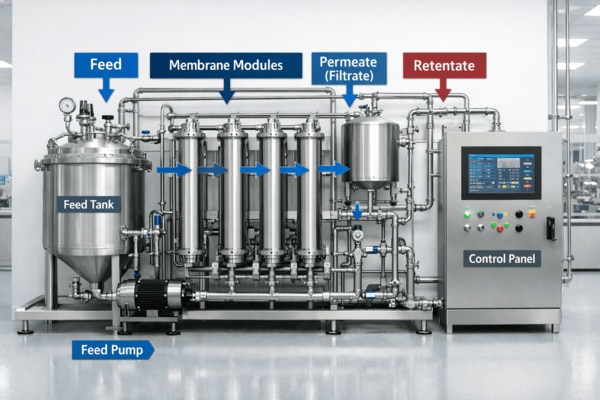
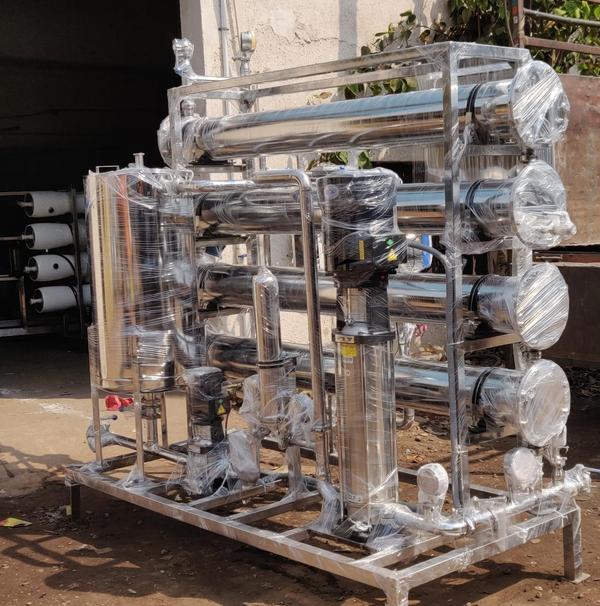
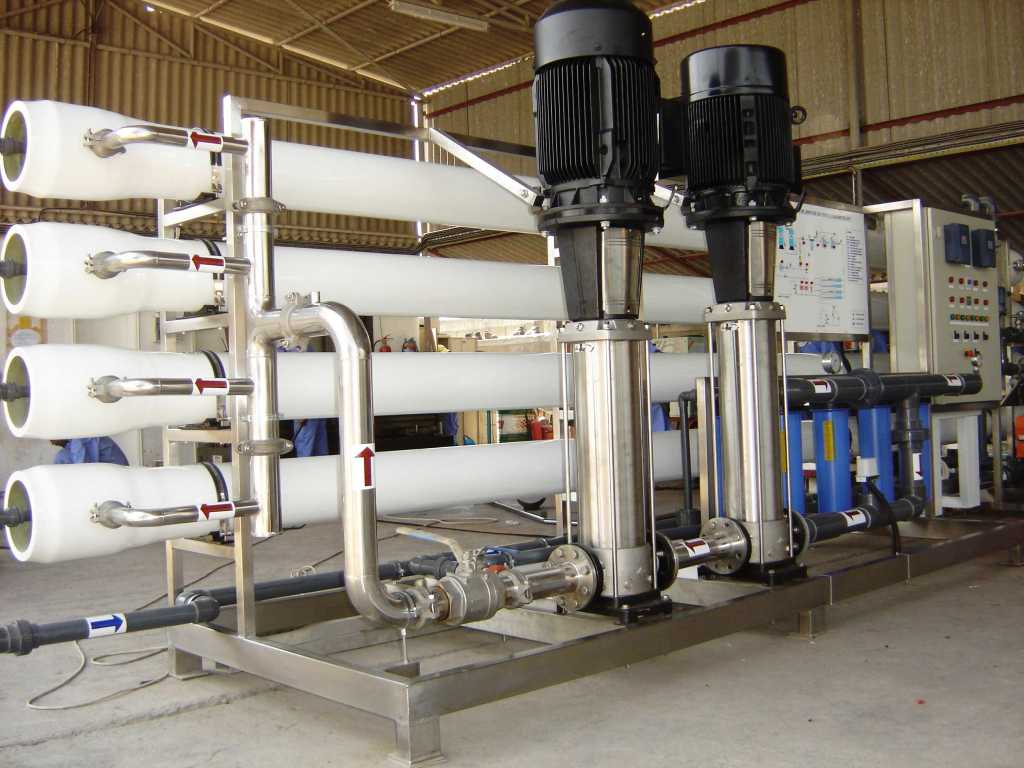
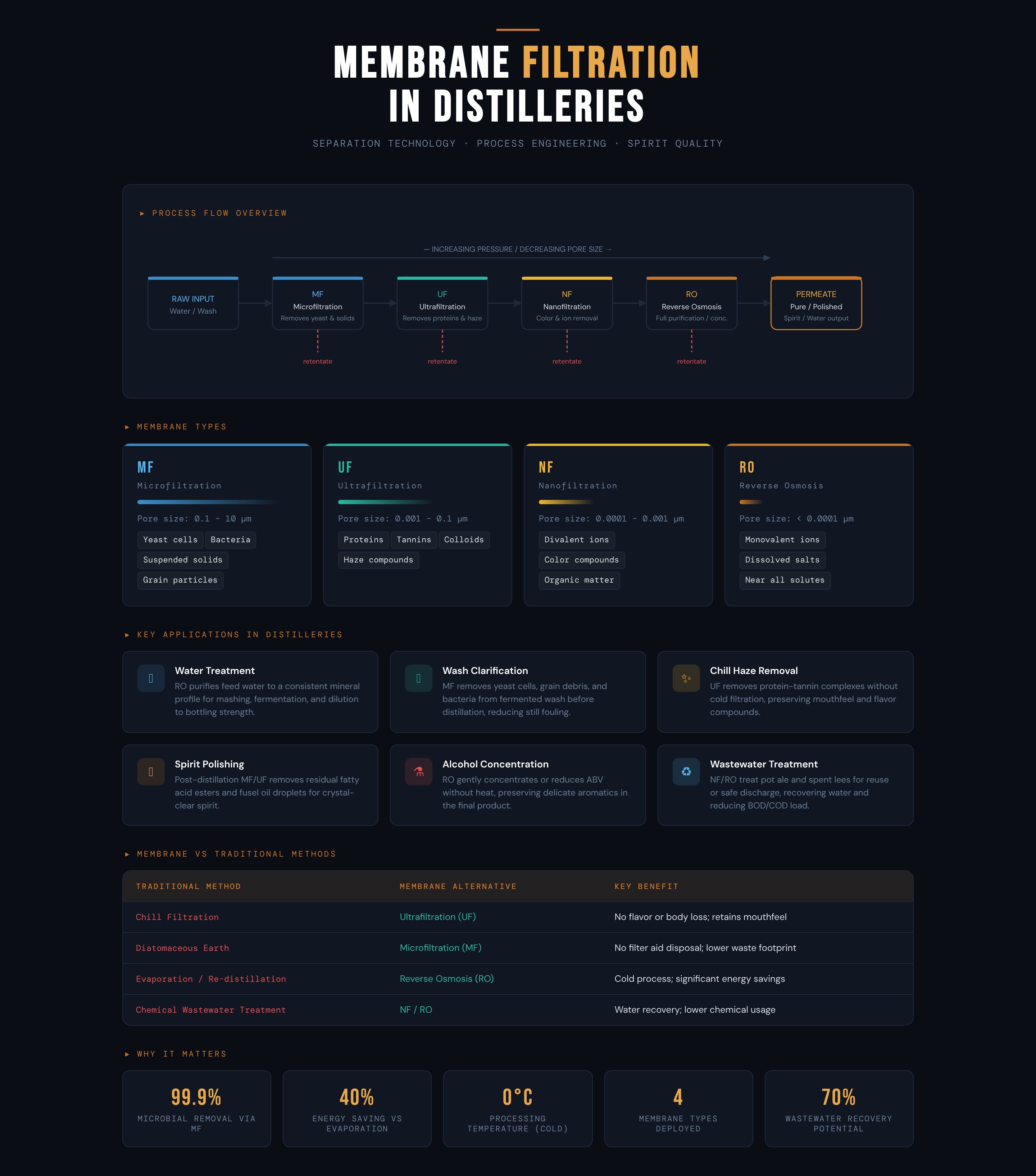
Membrane Filtration in Distilleries Membrane filtration is a pressure-driven separation technology widely used in distilleries to purify, clarify, and concentrate liquids without heat, preserving volatile aromatics and flavor compounds. How It Works A semi-permeable membrane acts as a physical barrier. Feed liquid is pumped across the membrane under pressure. Small molecules pass through (permeate), while larger particles, colloids, or molecules are retained (retentate). Separation is based on pore size, molecular weight cutoff (MWCO), and charge. Types of Membrane Filtration Used Type Pore Size What It Removes Distillery Use Microfiltration (MF) 0.1–10 µm Yeast, bacteria, suspended solids Clarification of beer wash, pre-filtration Ultrafiltration (UF) 0.001–0.1 µm Proteins, tannins, large colloids Haze removal, wine/spirit polishing Nanofiltration (NF) 0.01–0.1 nm Divalent ions, color compounds Wastewater treatment, partial demineralization Reverse Osmosis (RO) <0.0001 µm Almost everything including Water purification, alcohol concentration, wastewater monovalent ions Key Applications in Distilleries 1. Water Treatment (Feed Water) RO membranes purify incoming water to a consistent mineral profile, critical for mashing, fermentation, and dilution to bottling strength. Hard water minerals that affect enzyme activity and yeast health are removed. 2. Wash/Beer Clarification Before distillation, microfiltration removes yeast cells, grain particles, and bacteria from the fermented wash — improving still efficiency and reducing fouling in copper pot stills. 3. Chill Haze & Protein Removal Whisky and other spirits can develop haze when chilled due to protein-tannin complexes. UF removes these without chill filtration, preserving mouthfeel and flavor better than traditional methods. 4. Spirit Polishing Post-distillation, MF/UF membranes remove residual particulates, fatty acid esters, and fusel oil droplets, producing a brilliantly clear final product. 5. Alcohol Concentration / De-alcoholization Reverse osmosis can gently concentrate alcohol or reduce ABV without distillation — useful for low-alcohol products or cut adjustment without heat damage to delicate aromatics. 6. Wastewater Treatment (Pot Ale / Spent Lees) Distillery effluent (pot ale, spent lees) is high in BOD/COD. NF and RO treat this water for reuse or safe discharge, recovering water and reducing environmental load — a major sustainability driver. 7. Congener Management Selective membranes can fractionate specific congeners (esters, aldehydes, fusel alcohols), allowing distillers to fine-tune the flavor profile of new make spirit. Membrane Configurations Spiral Wound – Most common for RO/NF; high surface area, compact Hollow Fiber – Used in MF/UF; easy backwashing, good for high-solids feeds Tubular – Robust, used for viscous/high-fouling feeds like pot ale Plate & Frame – Used in lab-scale and specialized applications Advantages Over Traditional Methods TraditionalMembrane AlternativeBenefitChill filtrationUFNo flavor/body lossDiatomaceous earth filtrationMFNo filter aid disposal, lower wasteEvaporation/distillation for concentrationROCold process, energy savingChemical wastewater treatmentNF/ROWater recovery, lower chemical use Challenges & Considerations Membrane Fouling – Proteins, yeast, and phenolics can block pores; requires CIP (Clean-in-Place) with caustic/acid cycles Flux Decline – Permeate flow drops over time without proper maintenance Capital Cost – Higher upfront investment than traditional filtration Alcohol Compatibility – Membranes must be solvent-resistant (e.g., PVDF, ceramic, PTFE materials preferred for high-ABV streams) Regulatory Compliance – Some markets restrict membrane processing for certain spirit categories (e.g., Scotch Whisky regulations limit processing) Membrane filtration has become a cornerstone of modern distillery operations, balancing product quality, operational efficiency, and environmental sustainability.