

Description
Product details
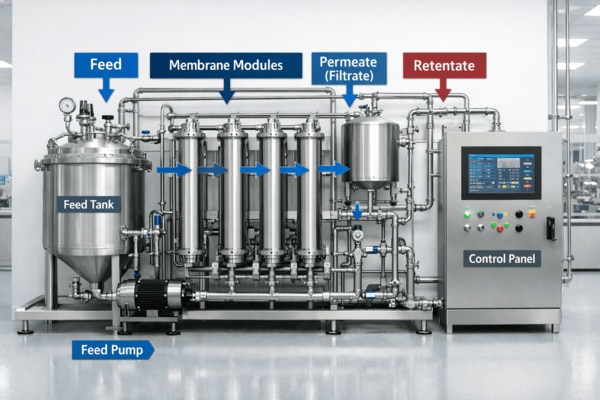
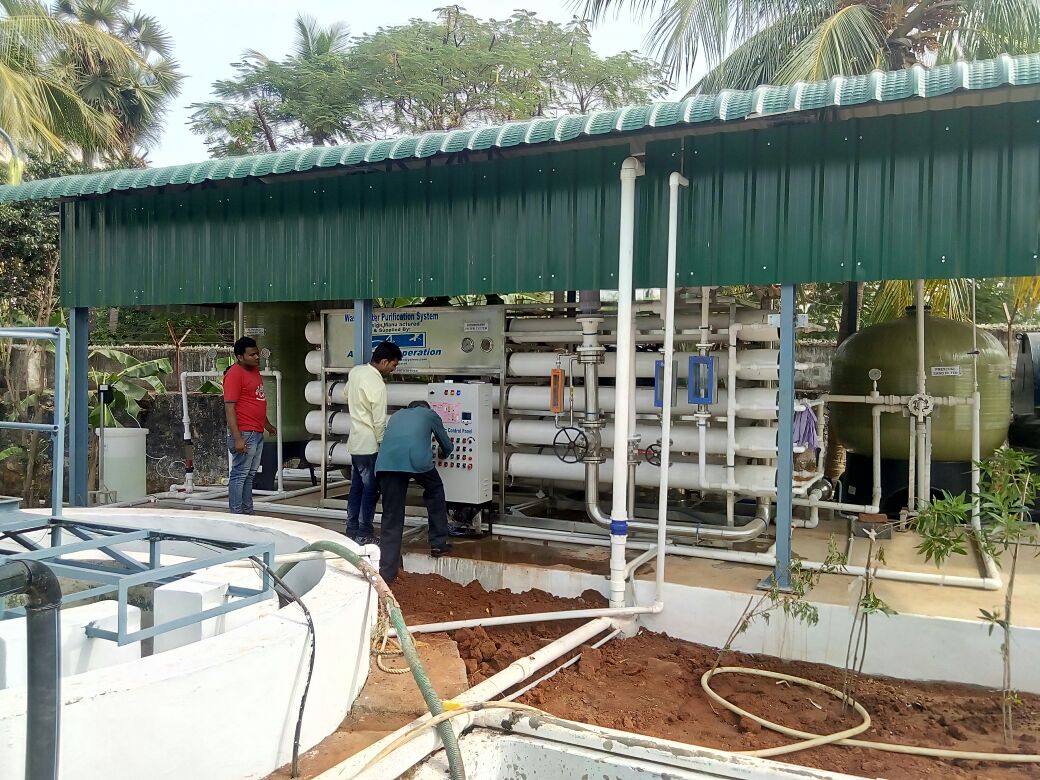
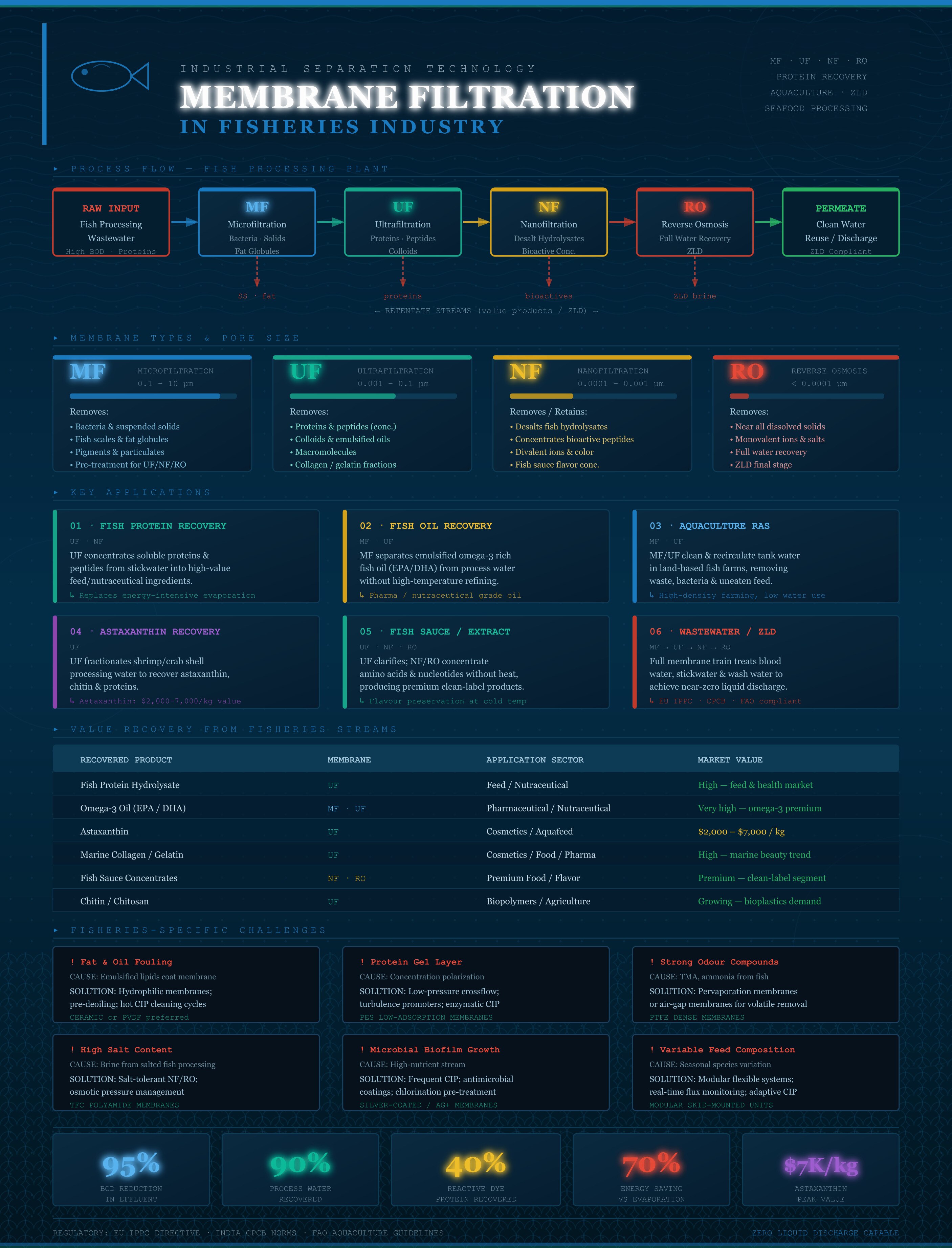
Membrane Filtration in the Fisheries Industry Membrane filtration in fisheries is applied across fish processing, aquaculture water management, seafood wastewater treatment, and valuable compound recovery. The industry generates large volumes of protein-rich, high-BOD effluent and valuable bioactive compounds — making membranes critical for both sustainability and value extraction. Why Membrane Filtration Matters in Fisheries Fish processing plants generate wastewater containing proteins, oils, blood water, and organic matter. Simultaneously, aquaculture facilities need clean recirculated water. Membrane technology addresses both — recovering value from waste streams while enabling environmental compliance. Types of Membrane Filtration & Their Role Membrane Pore Size Key Function in Fisheries Microfiltration (MF) 0.1–10 µm Removes bacteria, suspended solids, fish scales, fat globules Ultrafiltration (UF) 0.001–0.1 µm Concentrates fish proteins, peptides, enzymes; clarifies fish stock Nanofiltration (NF) 0.0001–0.001 µm Desalts fish hydrolysates; concentrates bioactive peptides Reverse Osmosis (RO) < 0.0001 µm Full water recovery; concentrates fish sauce/extracts Pervaporation Dense membrane Removes volatile amines (off-odor compounds) from fish processing water Key Applications 1. Fish Protein & Peptide Recovery Fish processing generates enormous volumes of 'stickwater' — the liquid fraction from fish meal production containing soluble proteins, peptides, and amino acids. UF membranes concentrate these proteins (fish protein hydrolysates) into high-value feed ingredients or nutraceuticals, replacing costly evaporation. 2. Fish Oil Recovery & Clarification MF membranes separate emulsified fish oil from processing water. The recovered oil — rich in omega-3 fatty acids (EPA, DHA) — is purified for pharmaceutical, nutraceutical, or feed markets. Membrane clarification removes phospholipids and oxidized compounds without high-temperature refining. 3. Aquaculture Recirculating Aquaculture Systems (RAS) In land-based fish farming, water must be continuously cleaned and recycled. MF/UF membranes remove fish waste (feces, uneaten feed, bacteria) from tank water, maintaining water quality and biosecurity without large water exchange — enabling high-density farming with minimal environmental footprint. 4. Fishmeal Stickwater Concentration Stickwater from fishmeal production is 5–10% dry matter. UF/NF membranes pre-concentrate this to 25–30% dry matter before evaporation, dramatically cutting energy consumption. The permeate is clean water reused in the plant. 5. Chitin & Astaxanthin Recovery from Shrimp/Crab Processing Crustacean shell processing generates wastewater rich in chitin, astaxanthin (a high-value antioxidant), and proteins. UF membranes fractionate these streams, enabling recovery of astaxanthin (worth $2,000–7,000/kg) and chitin for biopolymer applications. 6. Fish Sauce & Extract Concentration Traditional fish sauce/extract production is slow. UF clarifies fish extracts by removing particulates and lipids; NF and RO then concentrate the flavor compounds (free amino acids, nucleotides) without heat damage — producing premium, clean-label products. 7. Blood Water Treatment Fish slaughterhouses generate blood water — extremely high in BOD (up to 200,000 mg/L), proteins, and hemoglobin. UF membranes concentrate hemoglobin and protein fractions for use in pet food or feed, while the permeate is treated further for discharge. 8. Wastewater Treatment for Discharge Compliance Fish processing effluent contains high levels of BOD, COD, ammonia, and suspended solids. MF → UF → RO trains treat this effluent to discharge standards or enable water reuse, avoiding costly biological treatment alone. 9. Desalination for Aquaculture Feed Water Coastal aquaculture and hatcheries often require controlled-salinity water. RO membranes desalinate seawater or reduce salinity to levels suitable for specific species, especially in shrimp hatcheries and marine fish nurseries. 10. Recovery of Collagen & Gelatin Fish skin and bone processing generates collagen-rich streams. UF membranes isolate and concentrate fish collagen/gelatin with high molecular weight cutoff, producing high-purity marine collagen for cosmetics, food, and pharmaceutical use. Fisheries-Specific Membrane Challenges Challenge Cause Solution Fat & oil fouling Emulsified fish lipids coat membrane surface Hydrophilic membranes; pre-deoiling; hot water CIP Protein gel layer Protein concentration polarization at membrane Low-pressure operation; crossflow; enzymatic cleaning Strong odor compounds Trimethylamine (TMA), ammonia from fish Pervaporation or air-gap membranes for odor removal High salt content Brine from salted/smoked fish processing Salt-tolerant NF/RO membranes; osmotic pressure management Microbial growth High-nutrient streams support rapid Frequent CIP; antimicrobial membrane coatings; biofilm formation chlorination pre-treatment Variable feed composition Seasonal fish species changes alter Modular, flexible membrane systems; regular stream chemistry flux monitoring Membrane Materials Preferred in Fisheries PVDF (Polyvinylidene fluoride) — Most common for MF/UF; excellent chemical resistance, hydrophilizable Polyethersulfone (PES) — UF membranes for protein recovery; low protein adsorption variants Ceramic (Al₂O₃, TiO₂) — For hot CIP, high-fat streams, and aggressive cleaning Thin-film composite polyamide — For NF/RO in water recovery and extract concentration PTFE — For solvent/oil-containing streams and high-chemical exposure Value Recovery Summary Recovered Product Membrane Used Market Value Fish protein hydrolysate UF Feed / Nutraceutical Omega-3 fish oil (EPA/DHA) MF / UF Pharmaceutical / Nutraceutical Astaxanthin UF $2,000–7,000/kg Marine collagen / gelatin UF Cosmetics / Food / Pharma Fish sauce concentrates NF / RO Premium food Chitin / chitosan UF Biopolymers / Agriculture Clean process water RO Plant reuse Environmental & Regulatory Impact *BOD reduction: Up to 95% in treated effluent *Water reuse: 70–90% of process water recovered *Zero Liquid Discharge: Achievable with full MF→UF→NF→RO train *Regulatory compliance: EU IPPC Directive, India CPCB norms, FAO aquaculture guidelines all drive adoption *Carbon footprint: Membrane concentration uses 60–70% less energy than thermal evaporation. Membrane filtration in fisheries represents a shift from waste disposal to resource recovery — transforming what was once an environmental liability into a stream of high-value proteins, oils, and bioactive compounds, while achieving full water reuse.